To mark the university’s 20th anniversary, on 18 November, laureates of the Nobel Prize, the Turing Award and the Fields Medal, as well as a member of both the French and German national academies, convened at Beijing Normal–Hong Kong Baptist University (BNBU), and engaged in a cross-disciplinary discussion on the future of science and education in the era of artificial intelligence.
A roundtable forum, themed “Science in the Era of AI: Opportunities and Challenges”, was organised, where the scholars exchanged views on AI’s transformative role in scientific research. They also met with more than 20 media outlets, sharing perspectives on future scientific cooperation and higher education.
“We cannot rely on a single lens,” the forum began with a speech by Prof Chen Zhi. As the president of BNBU, the first university that upholds liberal arts education in the Chinese mainland, he concluded:
“We need the meticulous verification of the scientist, the deep wisdom of the academic, and the boundless curiosity of the student. This is the very essence of a liberal arts education.”
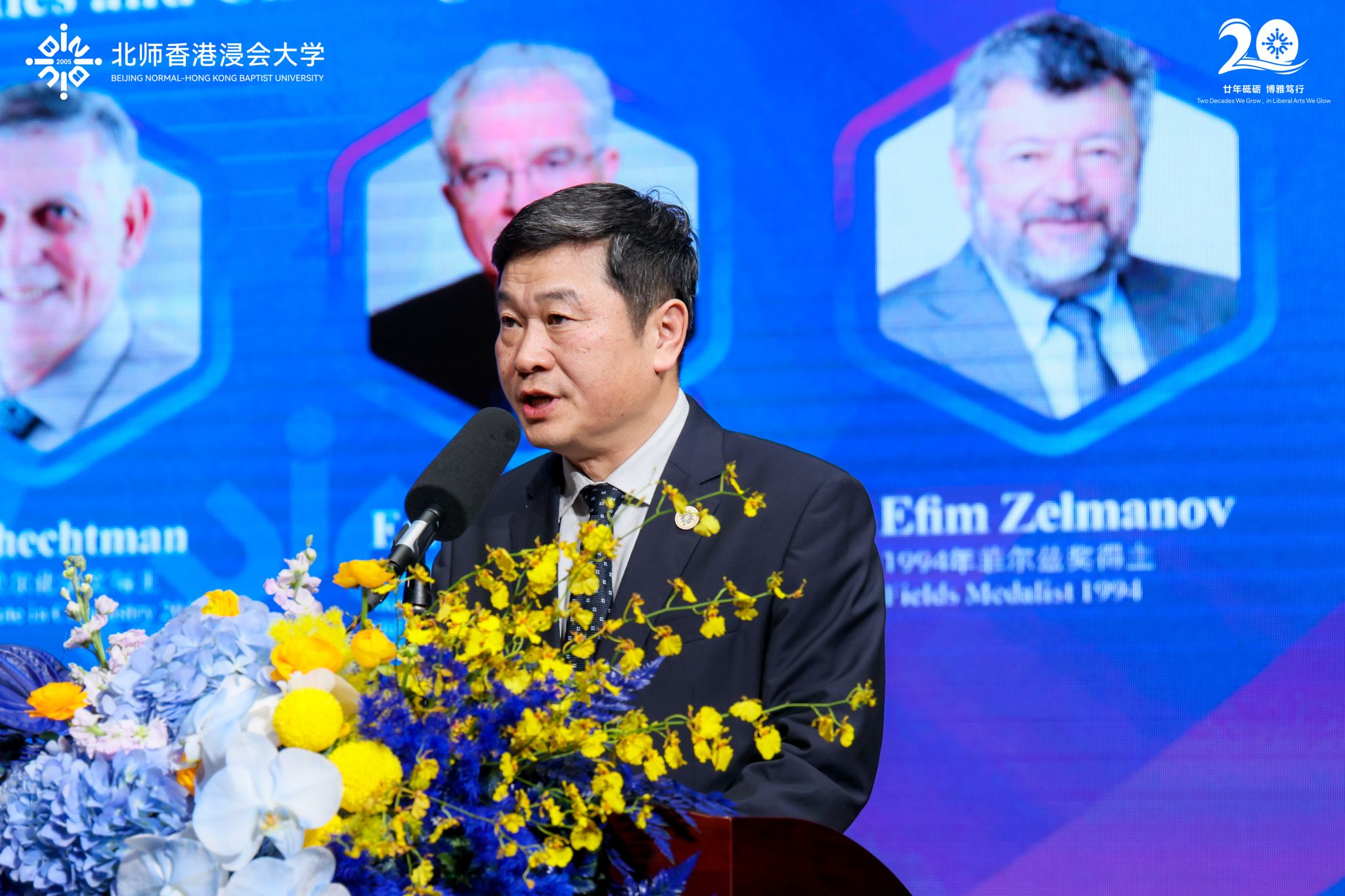
BNBU President Prof Chen Zhi speaks at the forum
AI and scientific discovery: tool or limitation?
Prof Joachim Frank, 2017 Nobel Laureate in Chemistry, noted AI’s remarkable efficiency but cautioned against overestimating its abilities. “Science is about executing experiments, adventures that are crucial for breakthroughs,” he said. “AI knows only the past. It does not know what has yet to be discovered.”
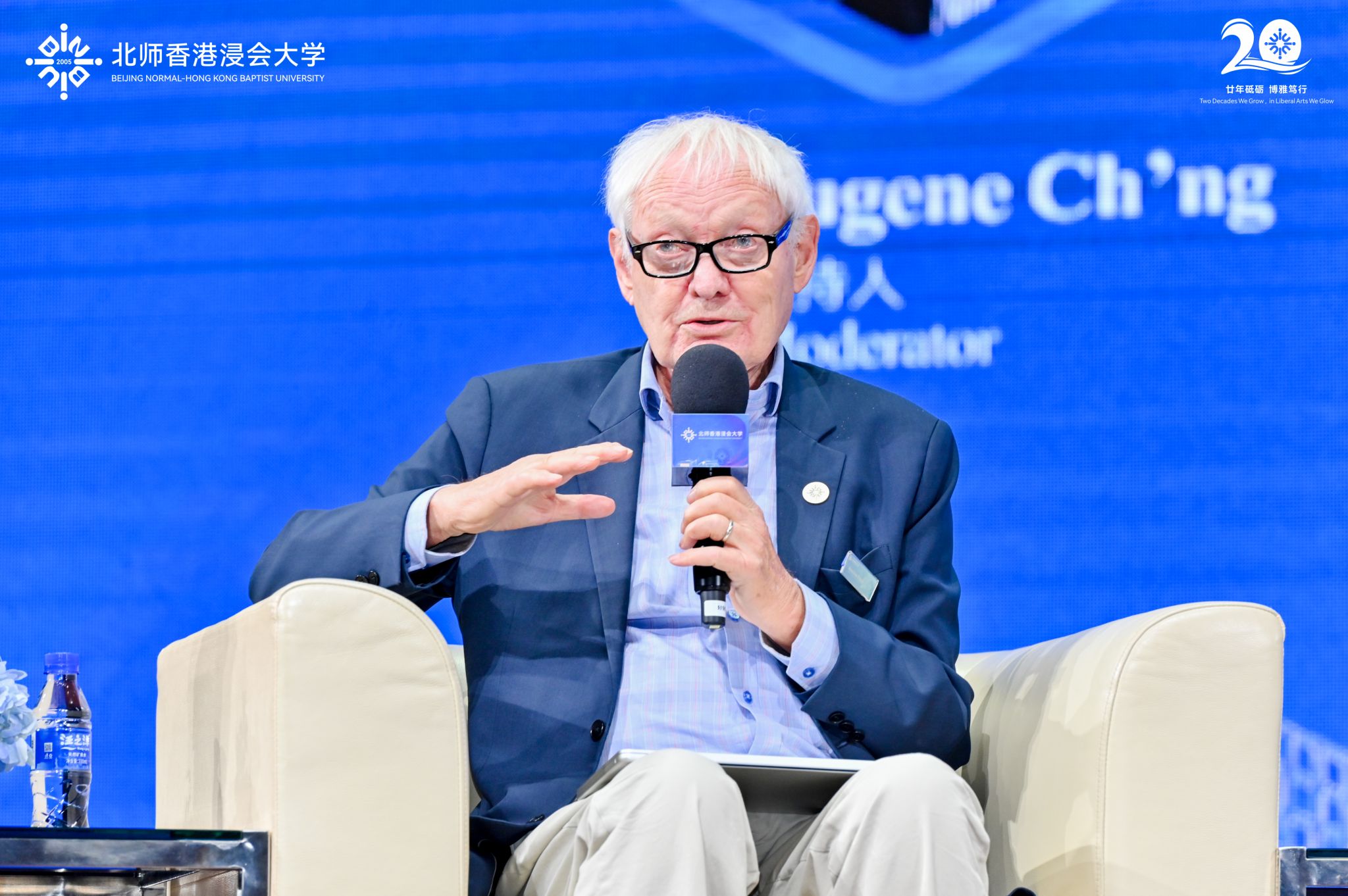
Prof Joachim Frank, 2017 Nobel Laureate in Chemistry, at BNBU's roundtable forum
Prof Eric Westhof, a member of both the French Academy of Sciences and the Leopoldina German Academy of Sciences, agreed that AI’s knowledge remains confined to existing frameworks, and would deny anything not written in the textbook. He recalled how Prof Dan Shechtman’s groundbreaking discovery of quasicrystals defied conventional scientific understanding. “Back then, AI would continue to tell Shechtman about his findings, ‘You are wrong.’”
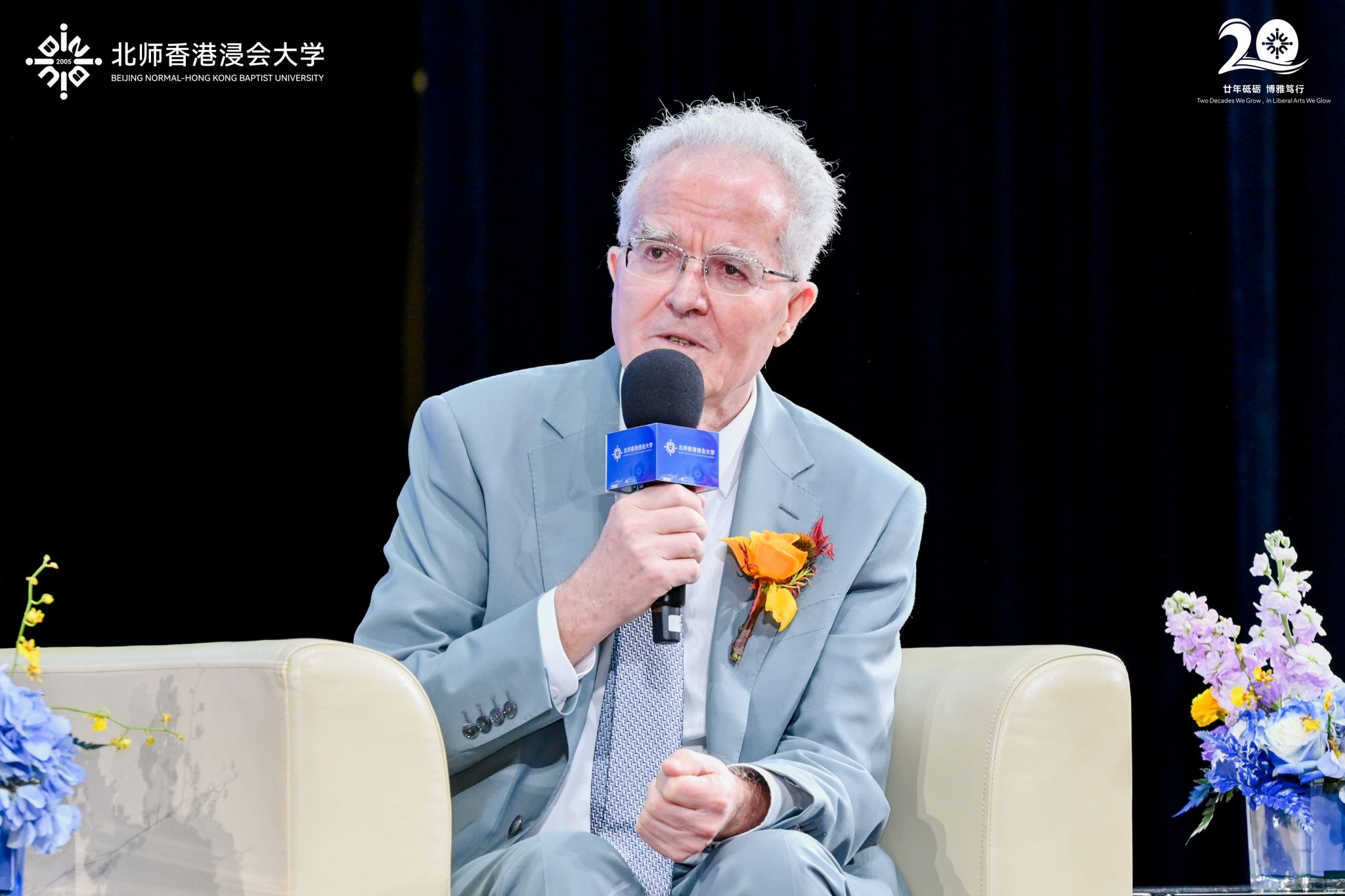
Prof Eric Westhof, a member of both the French Academy of Sciences and the Leopoldina German Academy of Sciences, at BNBU's roundtable forum
Prof Shechtman, the 2011 Nobel Laureate in Chemistry, responded with humour. “It was very easy to do (deal with denials). Because in my field, I was number one,” he said. He shared his secrets when facing scientific breakthroughs and doubts. “Intuition is number one. It’s all the knowledge that you’ve accumulated,” he added with a smile, “but luck is also very important! We are all very lucky to be born!”
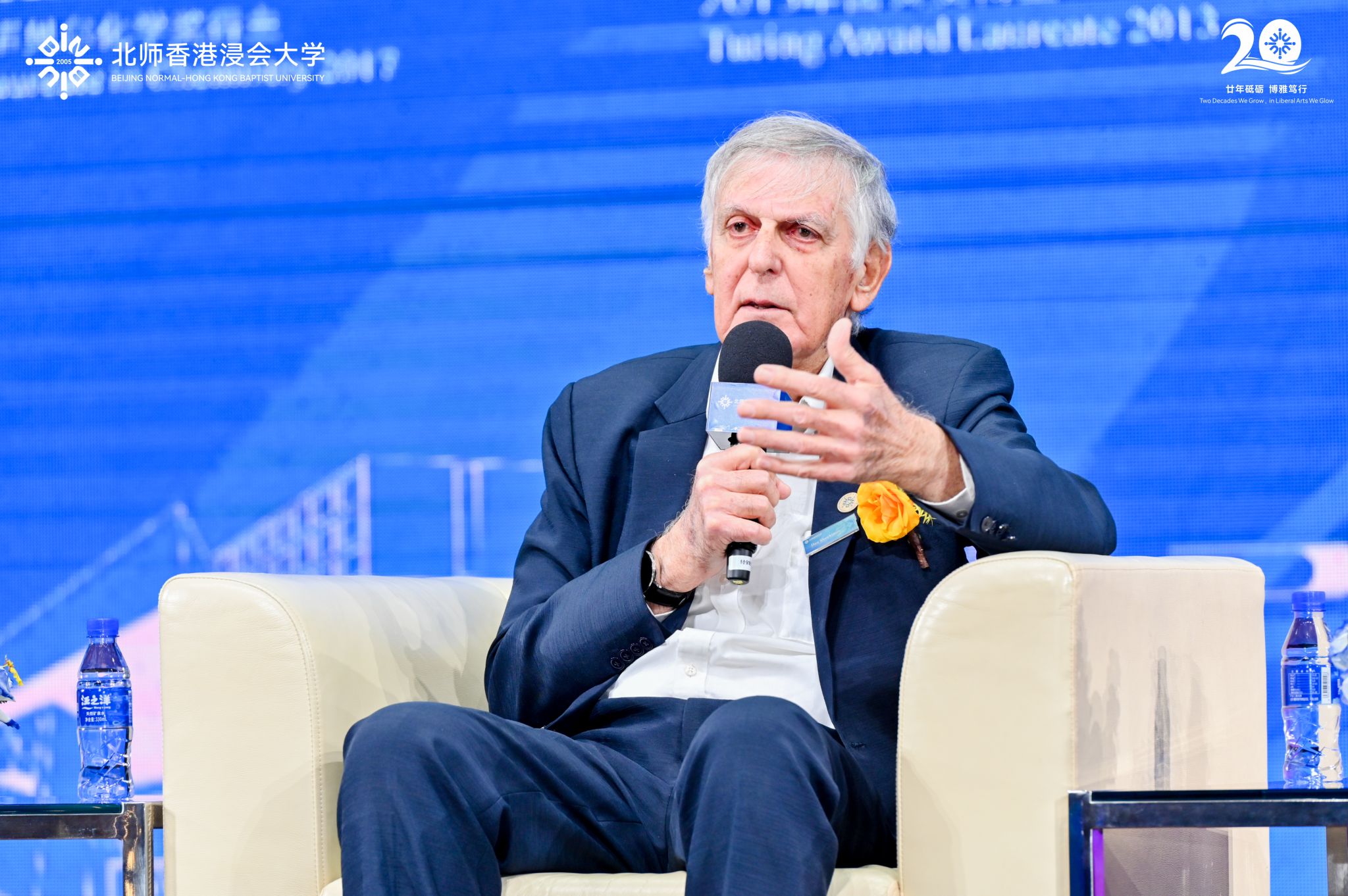
Prof Shechtman, the 2011 Nobel Laureate in Chemistry, at BNBU's roundtable forum
While acknowledging AI’s limitations, Prof Westhof recognised its value as a tool that frees scientists’ time and energy for deeper thinking.
Rethinking education in an AI-driven world
Turning to education, Dr Leslie Lamport, 2013 Turing Award Laureate, urged students to prioritise intellectual curiosity over narrow job training. “Study what you like,” he said. “We never know what’s going to be important in 10 years, or in the 40 years of your career. You will enjoy life if you’re doing something you love.” He took himself as an example. From aspiring physicist to a pioneer in concurrent computing, his success was shaped by following his interests rather than predetermined career paths.
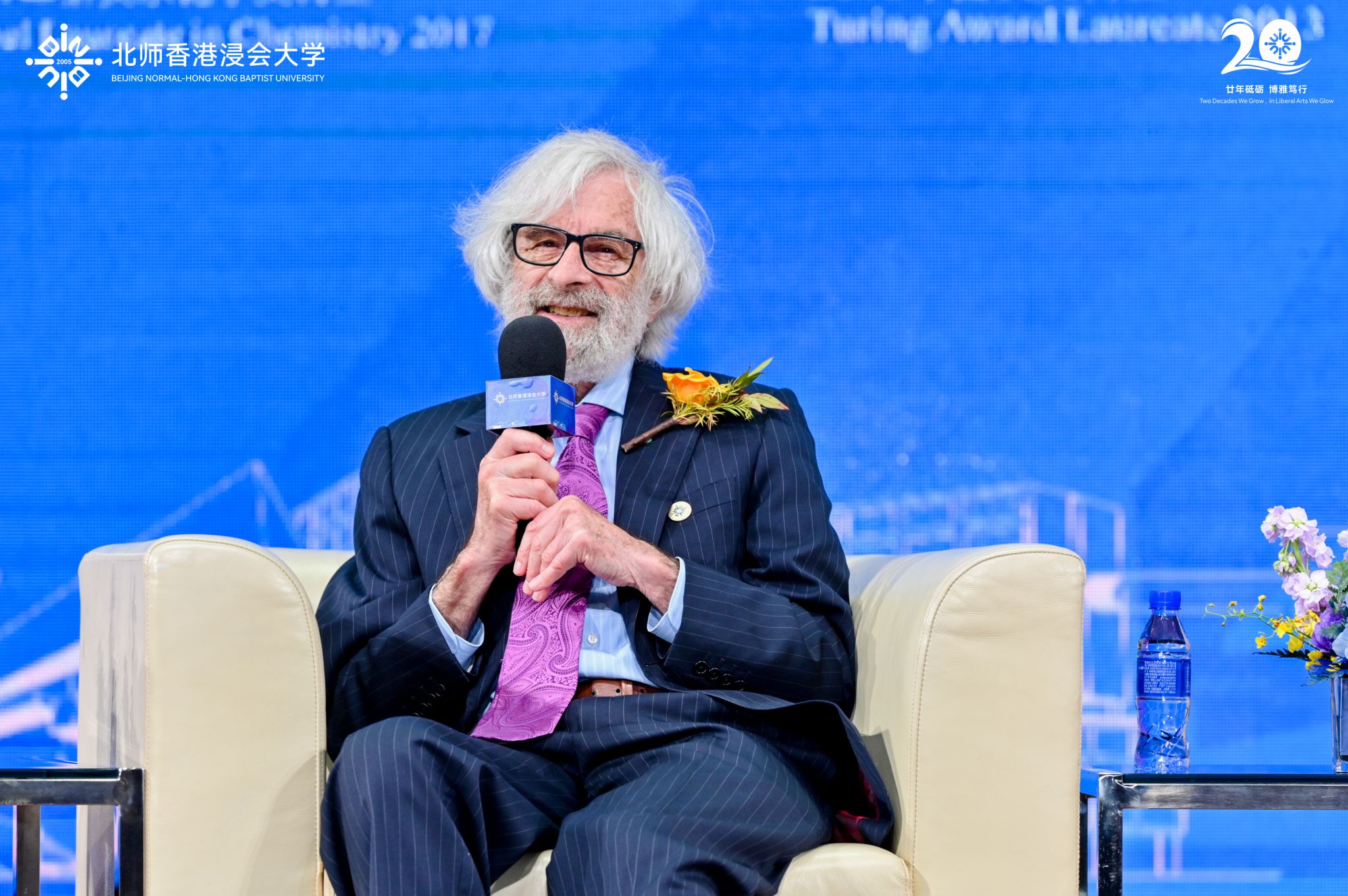
Dr Leslie Lamport, 2013 Turing Award Laureate, at BNBU's roundtable forum
Prof Efim Zelmanov, 1994 Fields Medal Laureate and Foreign Member of the Chinese Academy of Sciences, stressed the importance of academic ecosystems in nurturing exceptional talent. “Good students come from good centres, because they learn from the atmosphere,” he said, “and while listening to their mentors, students should make their own decisions as well.” “There is one world of mathematics,” he said at the press conference, regarding math education, which he thinks is boundless. He expected more future cooperation in China.
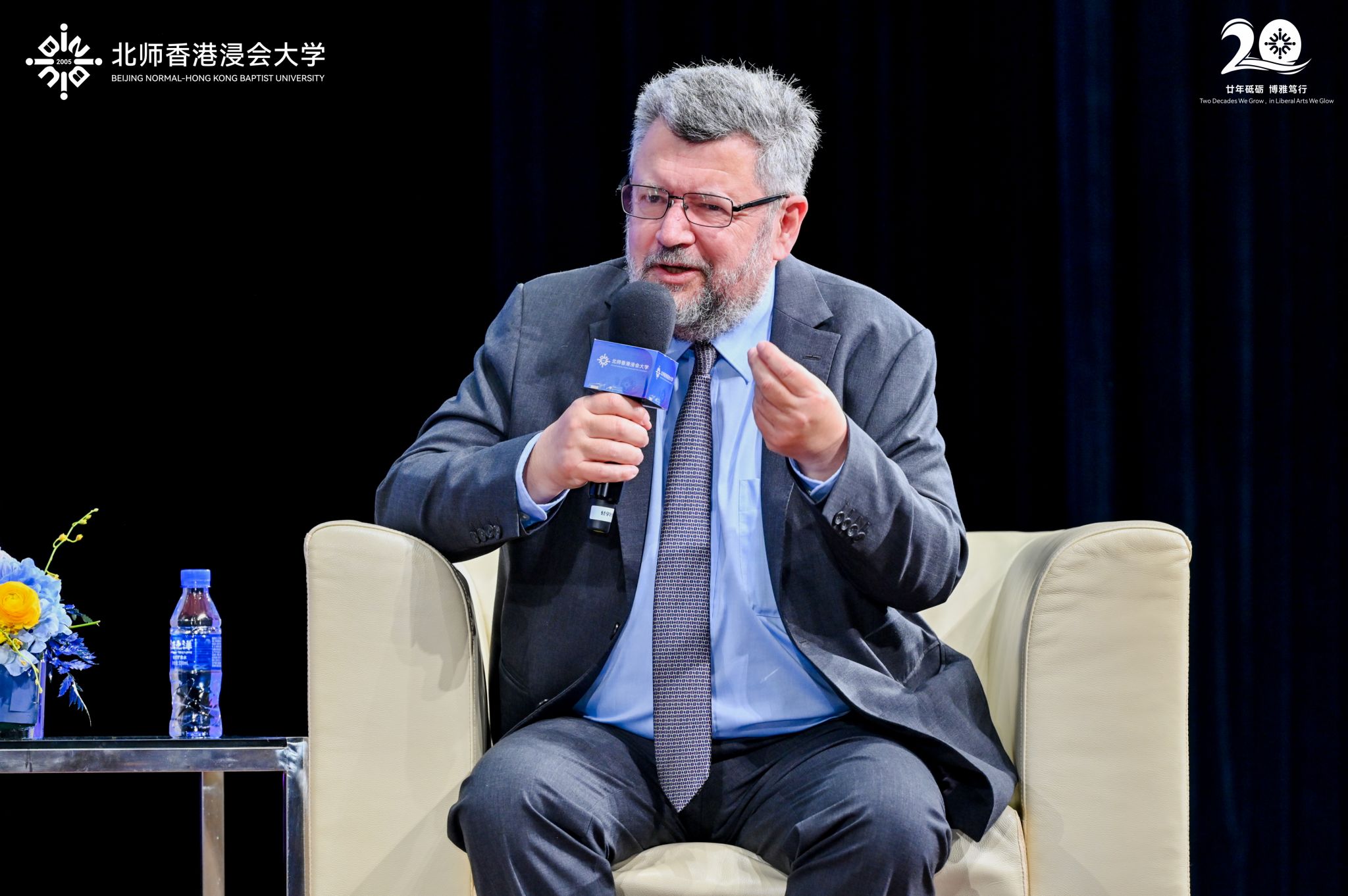
Prof Efim Zelmanov, 1994 Fields Medal Laureate and Foreign Member of the Chinese Academy of Sciences, at BNBU's roundtable forum
The forum exemplified the collaborative, forward-facing spirit that BNBU has cultivated over two decades of development. The insights shared by these leading scholars offer both guidance and inspiration for the future of science and education.
From MPRO
Reporter: Cecilia Yu, Koga Song
Video by Owen Li, Wang Bowen