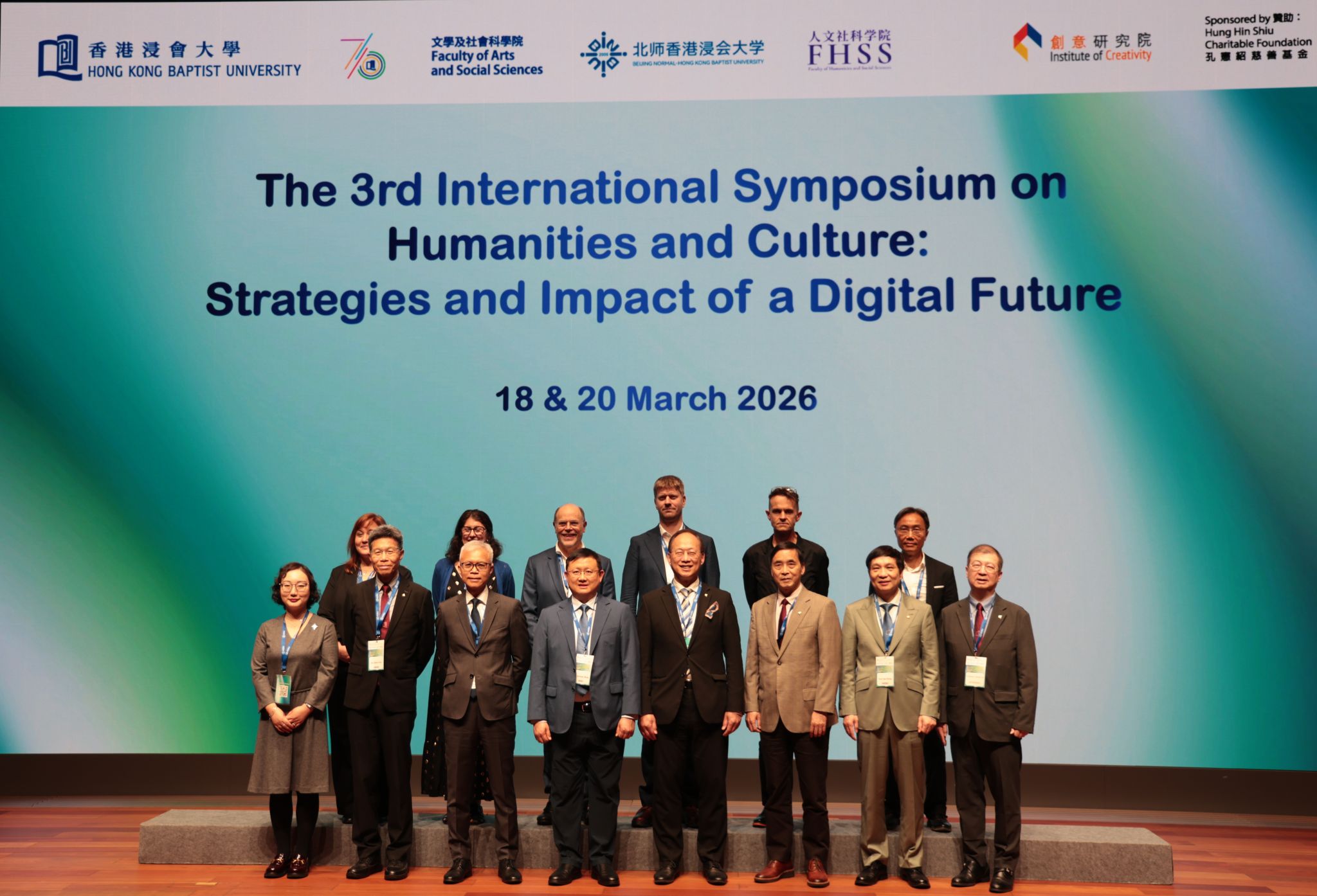
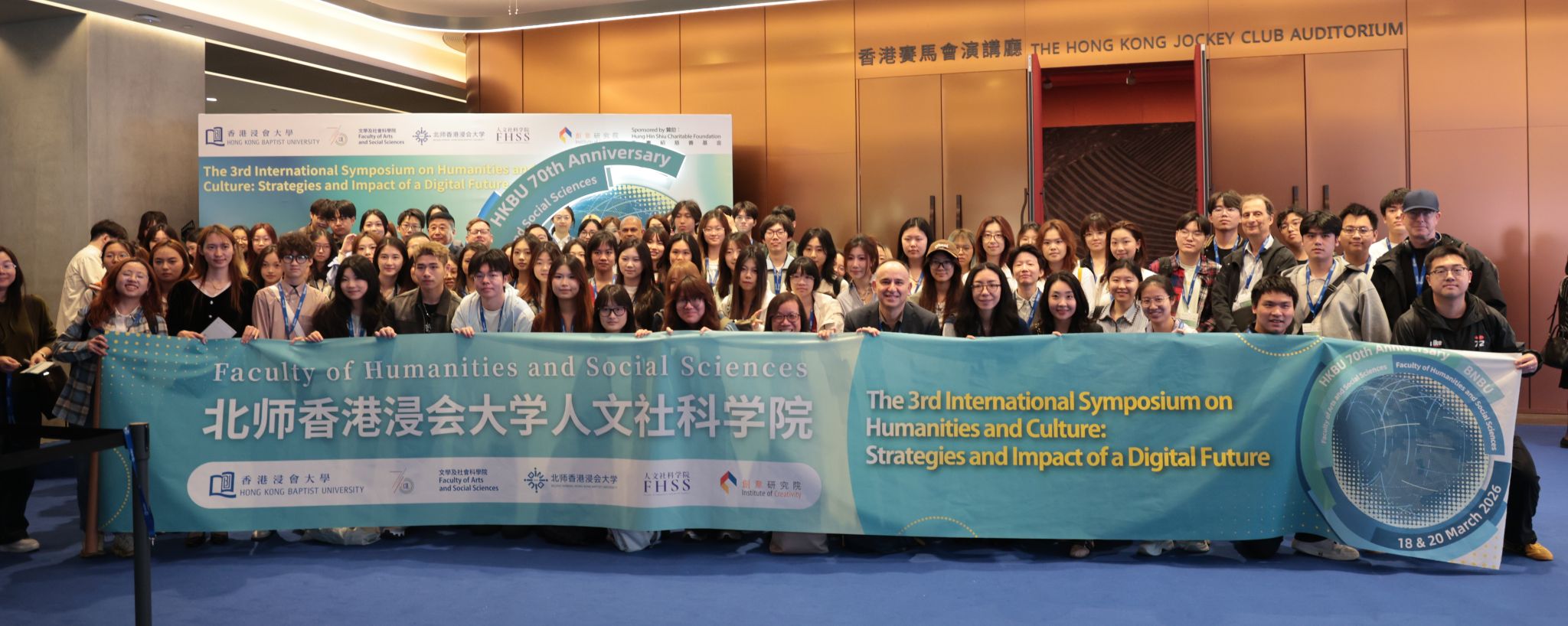
The 3rd International Symposium on Humanities and Culture: Strategies and Impact of a Digital Future was held in Hong Kong and Zhuhai from 18 to 20 March 2026, jointly hosted by the Faculty of Humanities and Social Sciences at Beijing Normal-Hong Kong Baptist University (BNBU) and the Faculty of Arts and Social Sciences at Hong Kong Baptist University (HKBU).
The symposium started at the Hong Kong Palace Museum on 18 March, and over 100 students and faculty from BNBU attended. HKBU senior management, Chairman of the Council and the Court at HKBU Dr Kennedy Y H Wong; President and Vice-Chancellor of HKBU Prof Alexander Wai, Museum Director of the Hong Kong Palace Museum Dr Louis Ng, HKBU Vice-President (Research and Development) Prof Lyu Aiping and HKBU Vice-President (Teaching and Learning) Dr Albert Chau attended the event.
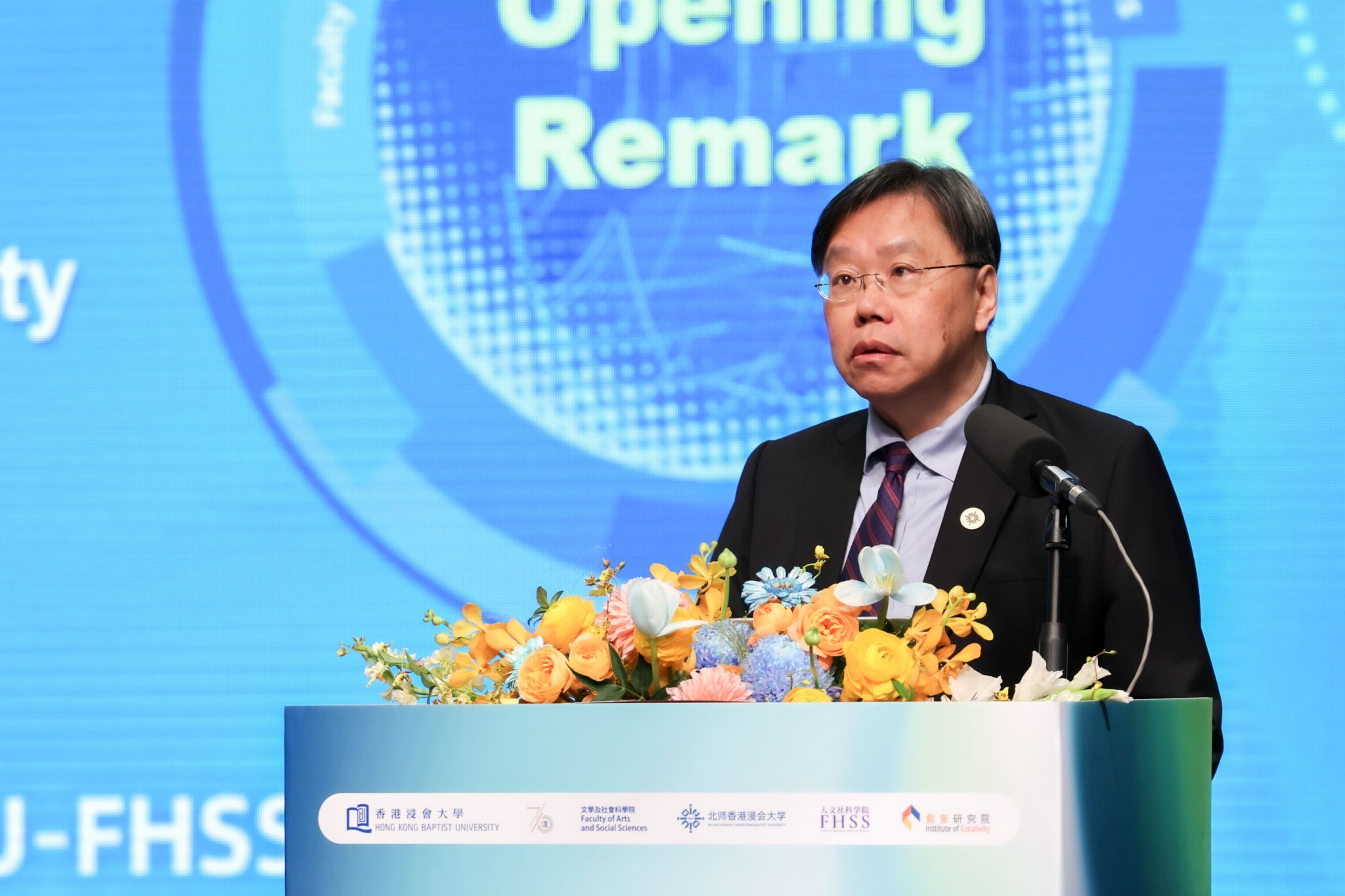
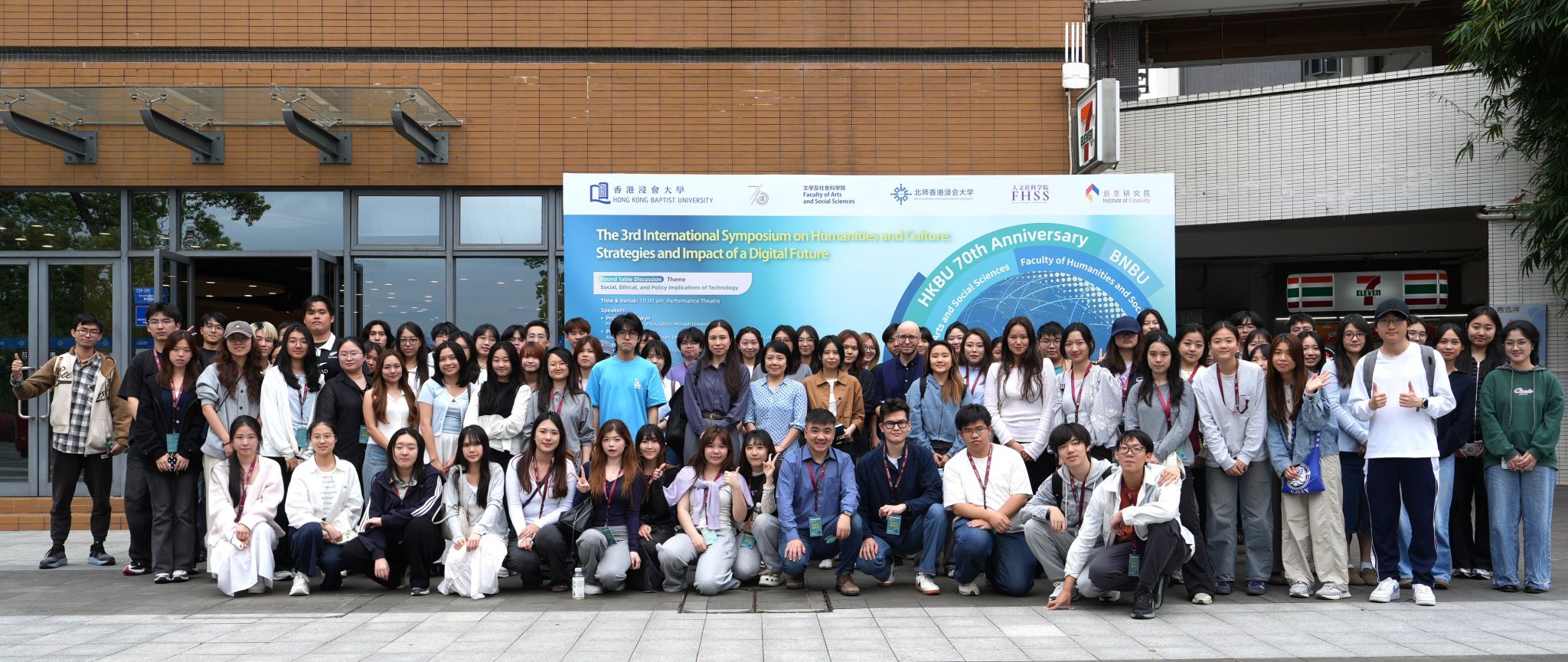
The symposium at BNBU on 20 March shifted its focus to the “Social, Ethical, and Policy Implications of Technology”, inviting participants to examine the critical challenges and opportunities posed by rapid technological advancements, including issues related to privacy, equity, governance, and the ethical responsibilities of scholars and practitioners. BNBU Provost Prof Patrick Chau, Dean of BNBU's Faculty of Humanities and Social Sciences Prof Tang Beibei, and Dean of HKBU's Faculty of Arts and Social Sciences Prof Daniel Lai attended the event.
In his remarks, Prof Chau emphasised that the integration between humanistic values and technological innovation remains a central priority in education. A digital future, he added, must be human-centred, guided by empathy, critical reflection, and creativity in order to achieve sustainable progress.
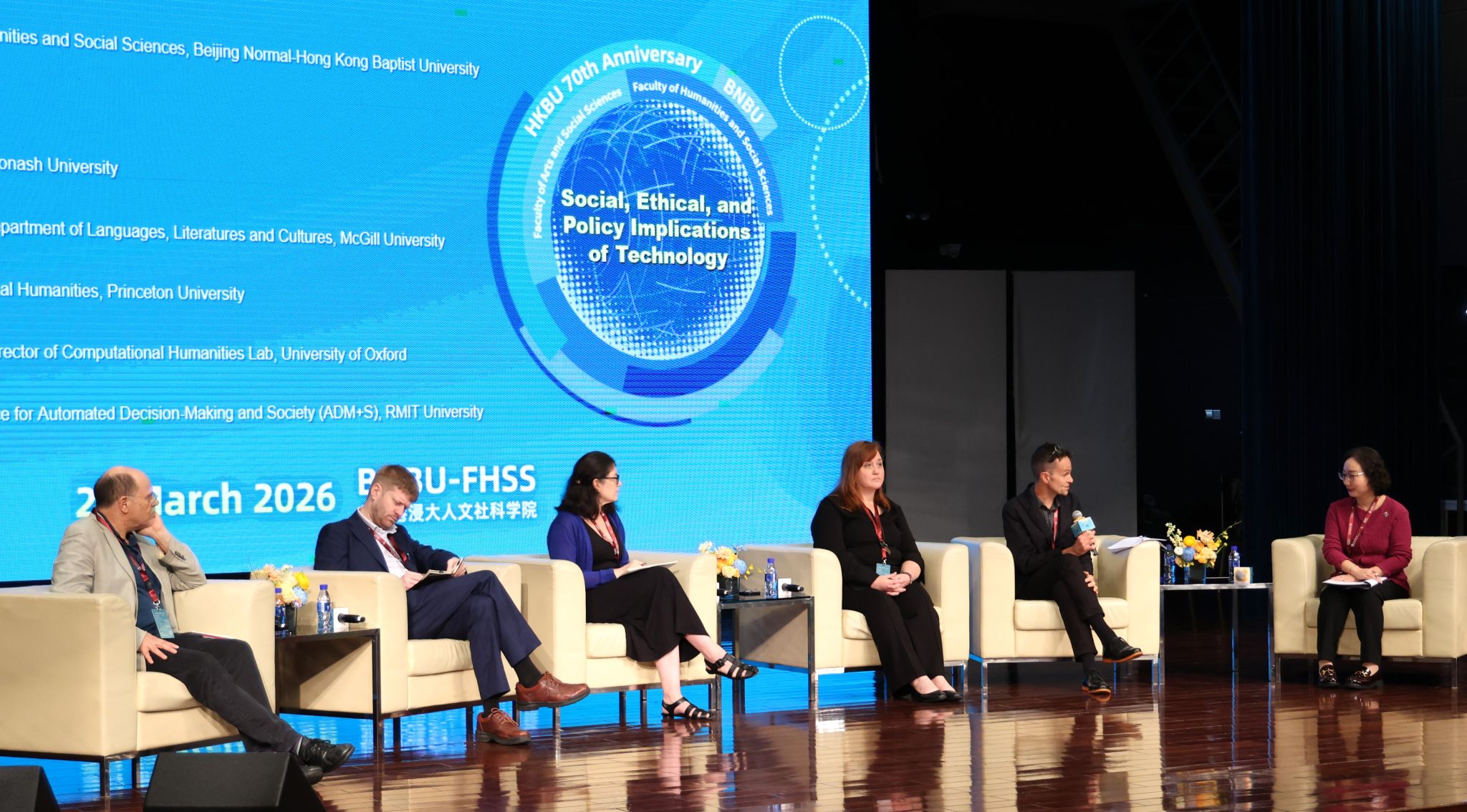
Renowned scholars from around the world were invited as keynote speakers at the symposium. They included Prof Neil Selwyn of Monash University; Dr Cecily Raynor of McGill University; Prof Meredith Martin of Princeton University; Prof Pieter Francois of the University of Oxford, and Prof Julian Thomas of RMIT University.
Prof Selwyn highlighted the need to rethink the assumption of technological abundance, remarking that “a major issue we must reconsider is the idea that technology is inherently limitless.”
Dr Raynor stressed that universities have the power to shape the future by deeply embedding ethics into teaching and connecting technical knowledge with ethical inquiry. The humanities should lead young people to approach the future with ethical awareness and a global perspective.
Prof Martin called for stronger interdisciplinary collaboration to safeguard knowledge systems and emphasised the importance of media literacy education. She pointed out that the ways we interpret and respond to technologies will have lasting and intergenerational consequences.
Prof Francois observed that technology not only amplifies existing divisions but also introduces new forms of inequality. Researchers, he stressed, have a moral responsibility to consider disparities in users’ capabilities while pursuing cutting-edge innovation.
Prof Thomas noted that a key task of the humanities is to clarify the far-reaching societal impacts of technology and to establish meaningful frameworks of accountability. “You can delegate action,” he remarked, “but not responsibility.”
Focusing on digital technology and higher education, Prof Chen Zhong, Dean of BNBU’s School of AI and Liberal Arts; Prof Yang Jian, Acting Dean of BNBU’s Faculty of Science and Technology; and Prof Indika Liyanage, Associate Dean of BNBU’s Faculty of Humanities and Social Sciences, discussed how different disciplines can respond to digital transformation, sharing BNBU’s practices and perspectives on educational innovation.
Prof Chen emphasised that AI should be embedded within general education rather than treated as a standalone technical field. Education, he suggested, should move beyond knowledge transmission towards cultivating wisdom, empathy, and ethical judgment, with assessment methods shifting towards project-based learning and oral defence.
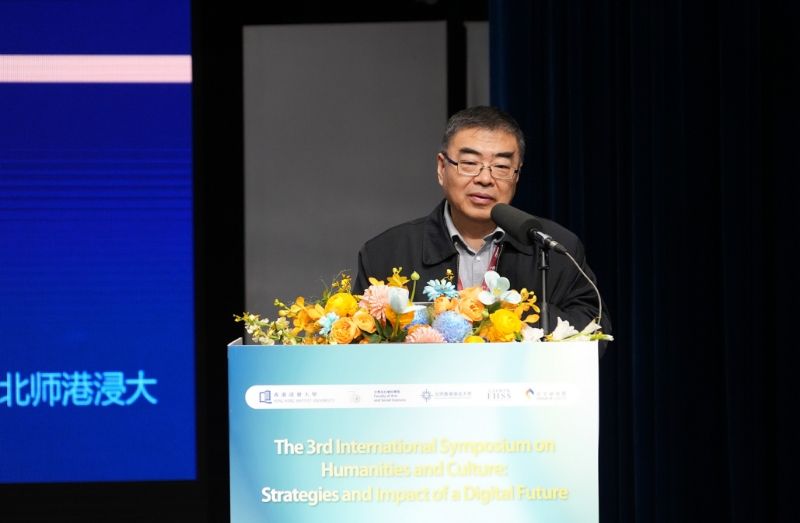
Prof Yang highlighted the importance of interdisciplinary collaboration, noting that fields such as data science can unlock new potential when combined with disciplines like archaeology. She added that students should be capable of raising or identifying good and meaningful questions after education.
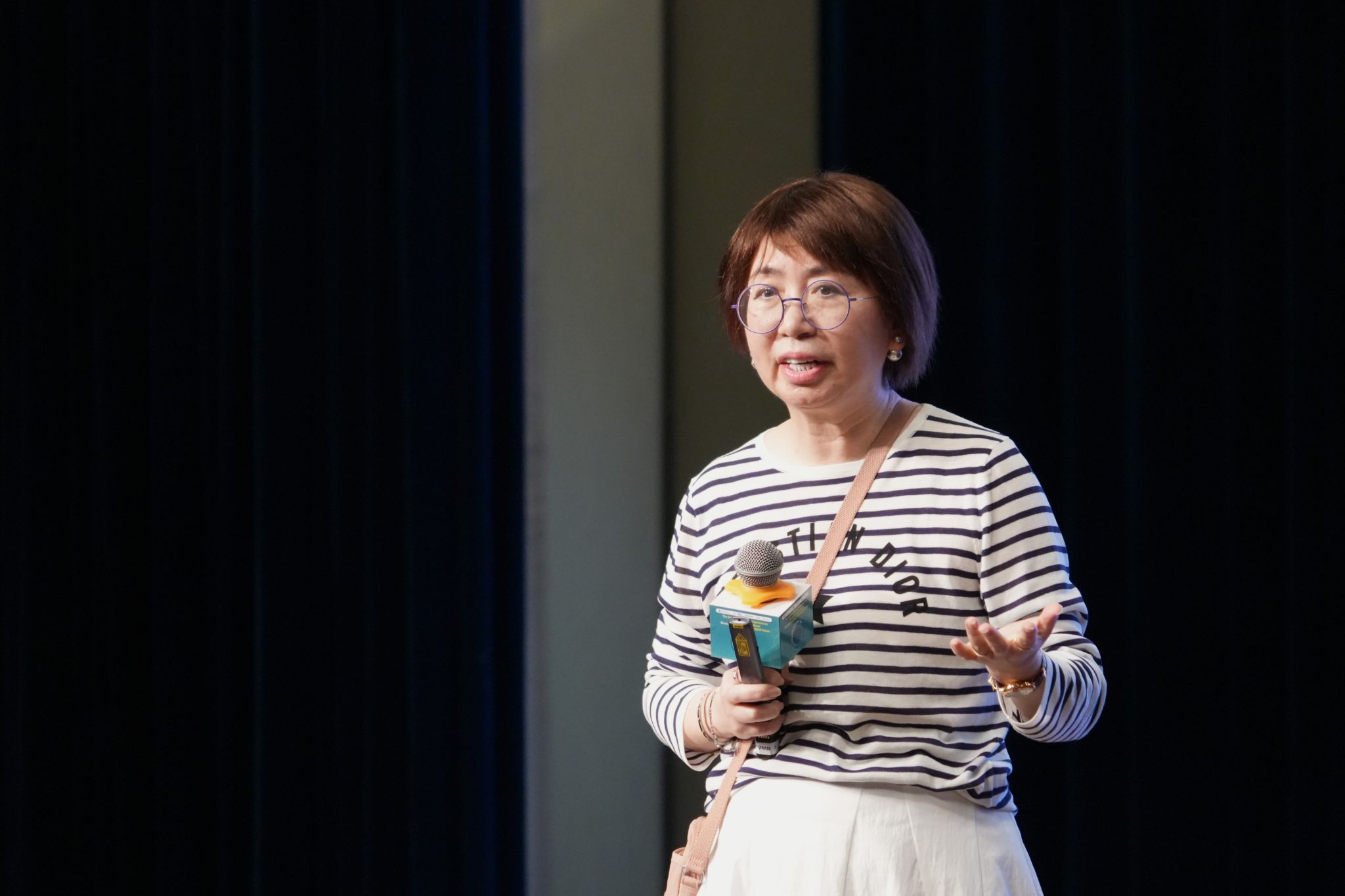
Prof Liyanage introduced the idea of an “anti-Silicon Valley”, suggesting that “the future belongs to coders who appreciate poetry and engineers who have read Shakespeare,” for they own the richness of human experience and bring meaning and soul to technological development.
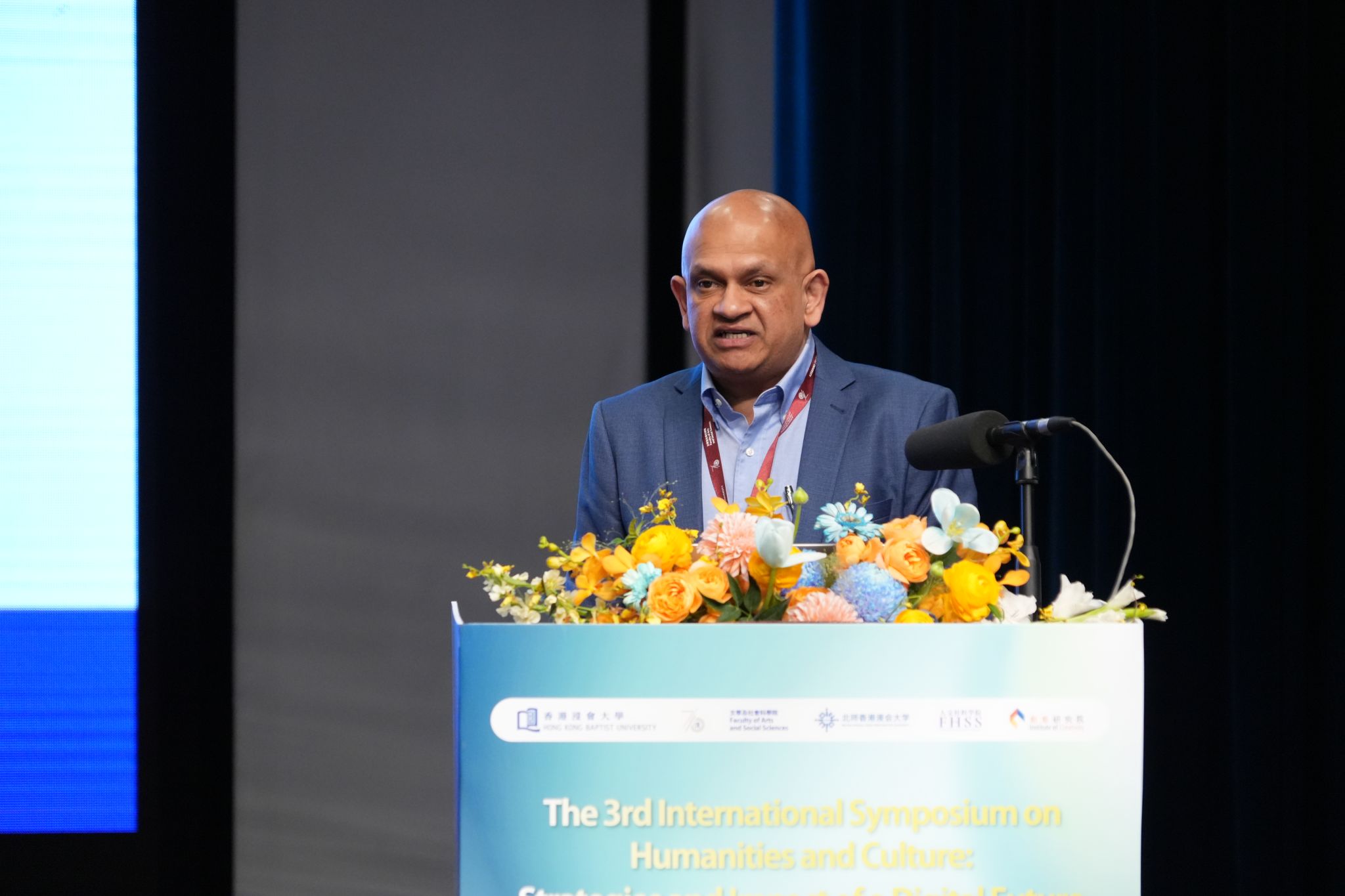
Prof Tang introduced that two new undergraduate programmes will be launched in September this year, Digital Intercultural Studies and Transdisciplinary Digital Humanities, and the Faculty has already made corresponding adjustments to its curriculum design and assessment methods.
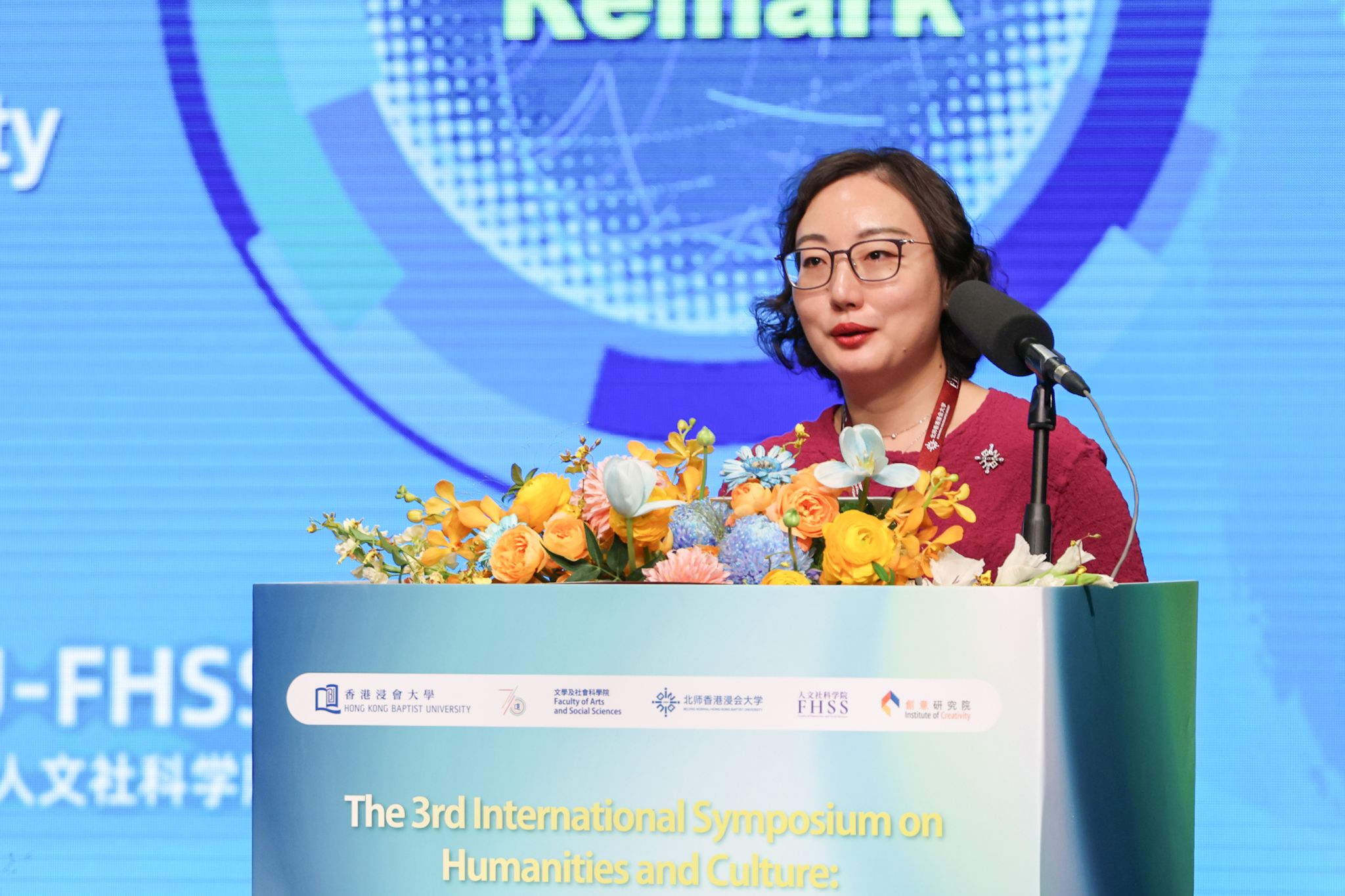
Additionally, students from HKBU and BNBU engaged in a dialogue session themed “University Education and Life in the Digital Age”, where they shared their perspectives and experiences navigating academic and personal life amidst ongoing digital transformations.
From MPRO
Reporter: Cecilia Yu
Photos provided by Hanna He, Wang Xinyue, BNBU FHSS