This academic year, BNBU welcomes a new group of faculty members from around the world, each bringing a wealth of experience, diverse teaching perspectives and exciting research ideas.
The BNBU Talent 100 Scheme is in its second year, helping make the university a new starting point for scholars worldwide. We've invited three of the teachers, and let's hear their stories.
Prof Stephane Laurent@BNBU: An aesthete with footprints around the world
From designing objects and painting to investigating the ideas behind art and architecture, Prof Stephane Laurent has built a career at the intersection of creative practice and academic inquiry. Now as a researcher and educator, he joins BNBU at the Department of Languages and Cultures.
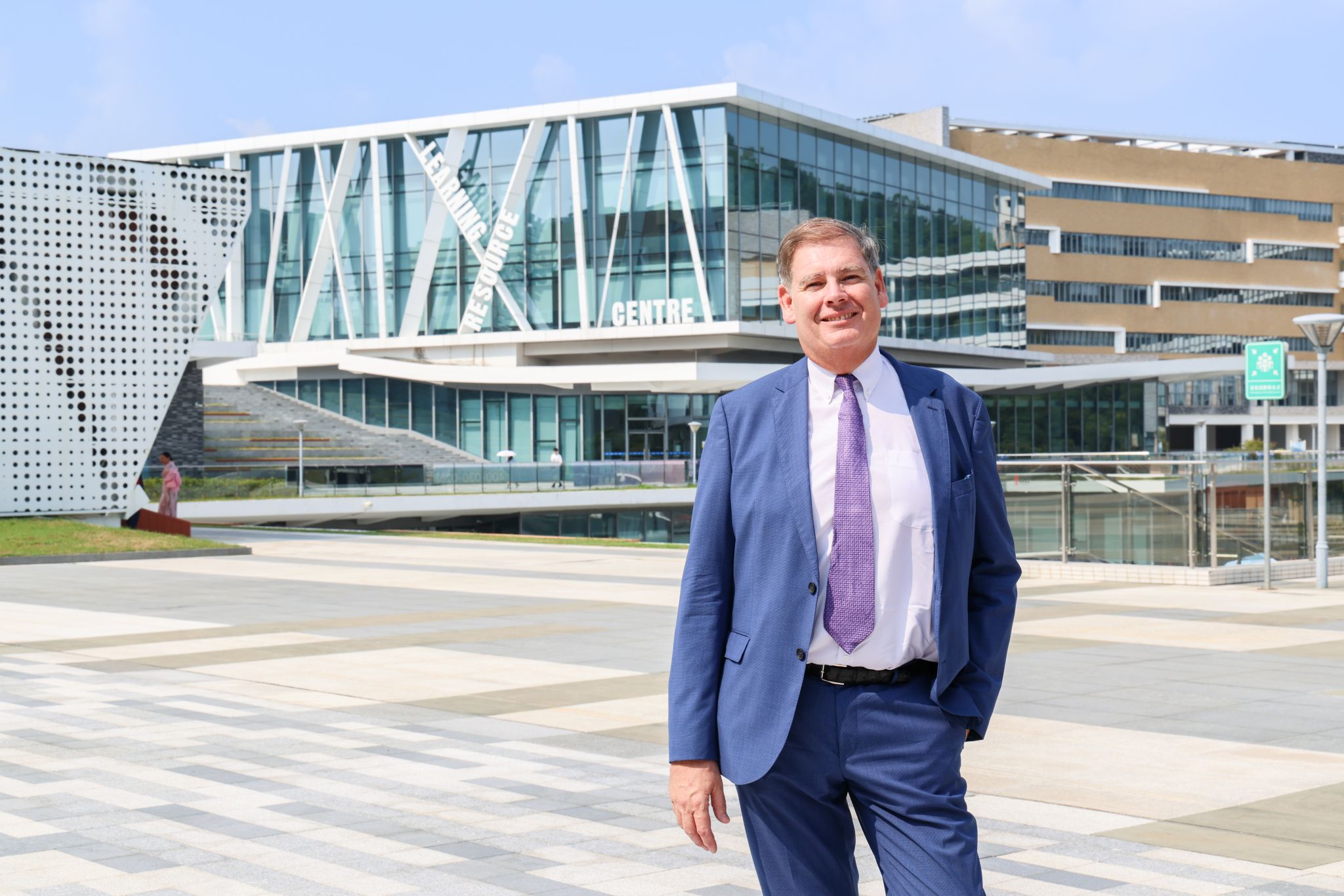
Prof Stephane Laurent at BNBU
His passion for aesthetics has taken him across the world after decades of academic commitment. He has conducted research and worked across continents. Such experiences have further shaped his perception of how cultural contexts influence artistic expression.
Laurent began his professional journey as a practical interior designer and artist before moving towards art history and theoretical research. For him, the transition was a natural progression.
“Some like to think and speak about things, so they are trained to deliver their knowledge, and I am one of those,” he smiled and said. His practical experience gave him an understanding of how creative works are made, while academic study allowed him to examine the intentions, ideas and cultural influences behind them.
This combination of practical and theoretical knowledge also informs his approach to education. “For me, teaching requires constant improvement,” he said. “I need to know my students, understand their needs and feelings, so that I can adapt my teaching accordingly.”
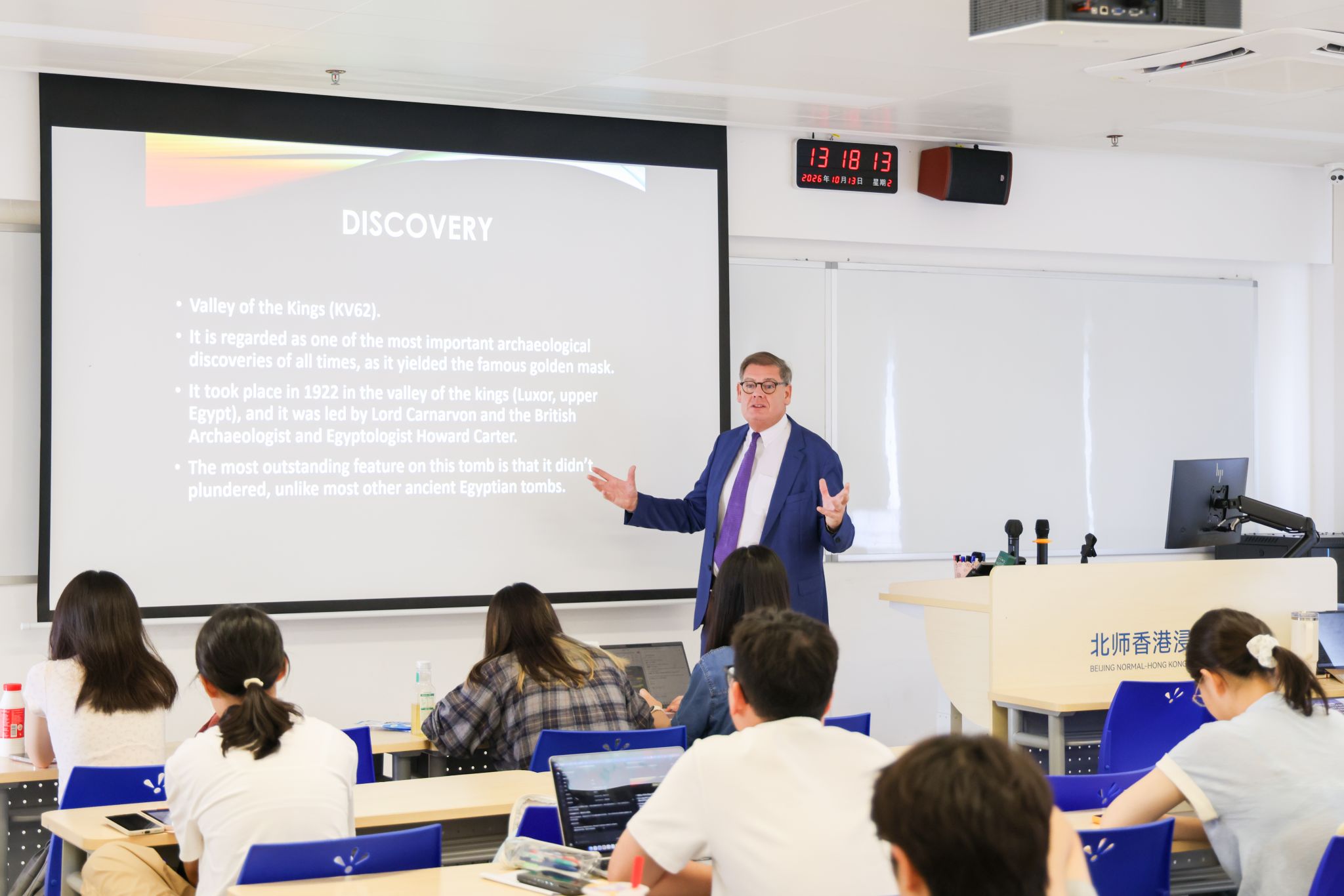
Prof Laurent in class
Laurent hopes to help students look beyond conventional boundaries between disciplines. From architecture and graphic design to museum curation, art history and the creative industries, he sees these fields as much broader than many people imagine.
“The field I'm dealing with is very wide and open. When you are fascinated with beauty and aesthetics, with how the creative industries express and make things, you will find your opportunities here,” he explained.
He also emphasises the importance of knowing themselves. “It's important to know your interests, strengths, limitations and ambitions,” he said. Students should identify what genuinely motivates them and equip themselves with the means to pursue their goals.
"As a teacher, I always bear in mind that we are here to help them to be more professional," he said.
Looking ahead, Laurent is particularly interested in strengthening connections between the humanities and creative disciplines at BNBU. He hopes to contribute to interdisciplinary teaching and collaboration, while developing new courses that connect architecture and design. His research will continue to explore cross-cultural exchange, including historical connections along the Silk Road and the movement of ideas between Eastern and Western societies.
His journey from practice to theory has not meant leaving one field behind, but discovering how different perspectives can enrich each other, and enhancing his teaching.
Dr Joscha Diehl@BNBU: New job, new challenges, same curiosity
“Does 'Hao (好)' mean 'okay'? How about 'Le (了)'?” Dr Joscha Diehl was trying to figure out the two Chinese characters at a BNBU coffee shop.
Recently joining BNBU's Department of Computer Science as an associate professor, he is determined to recognise all the Chinese words that confront him in the elevator within the campus. Though it is his first time living and working in Zhuhai, he is enthusiastic about the new changes in life.
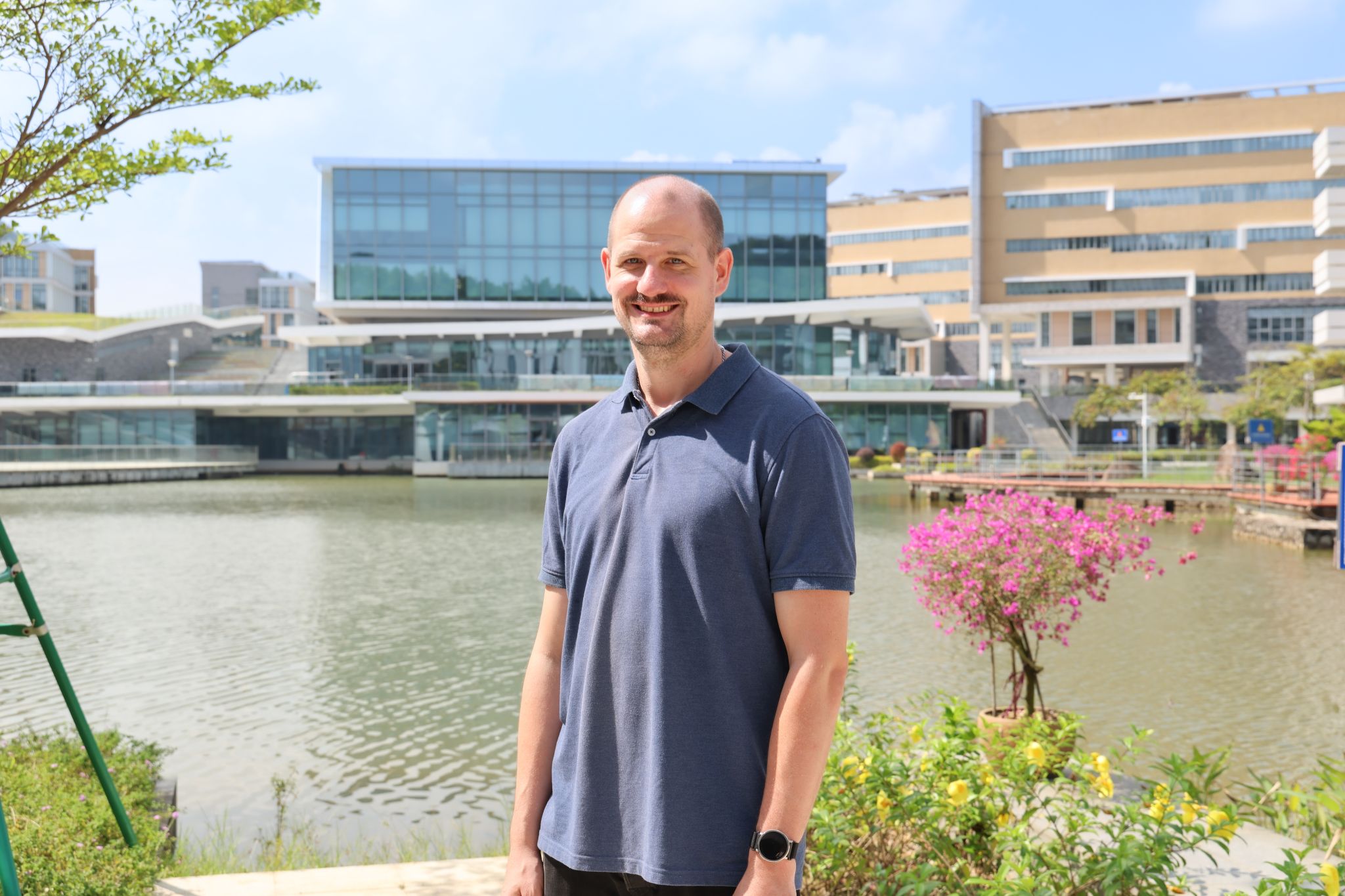
Dr Joscha Diehl at BNBU
“It's always fun to learn new stuff,” said Diehl, and such attitude can also be seen in his academic path. For him, changing academic fields has been a way of following his curiosity towards questions that matter beyond the boundaries of discipline.
Diehl began his academic career in mathematics. Over time, he became increasingly interested in research that yields more direct practical applications. Working with a colleague on biological problems helped him see new possibilities. “The transition just gradually happened,” he said, “I pulled more in this direction until I realised that I was barely doing any theoretical math anymore.”
Today, he is bringing together mathematical thinking, machine learning and biological research to explore problems with real-world implications, focusing on deep learning for sequential data, where information arranged in a particular order, such as stock prices, weather records and DNA sequences.
At BNBU, having applied the Guangdong and Hong Kong Universities “1+1+1” Joint Research Collaboration Scheme, he works with a collaborator in Hong Kong Baptist University. The team will investigate some species closely related to Caenorhabditis elegans, hoping to offer insights relevant to other biological questions, including agricultural challenges involving parasitic worms. In future research projects, he plans to involve undergraduates giving them opportunities to explore scientific questions beyond the classroom.
Diehl is not only an experienced researcher, but also a seasoned educator. Having taught for over a decade in Germany, Norway and the US, he is accustomed to presenting complex ideas in an easily digestible way. “I can sense when someone isn’t keeping up. Before I continue, I need to find a way for us to be on the same page,” he said.
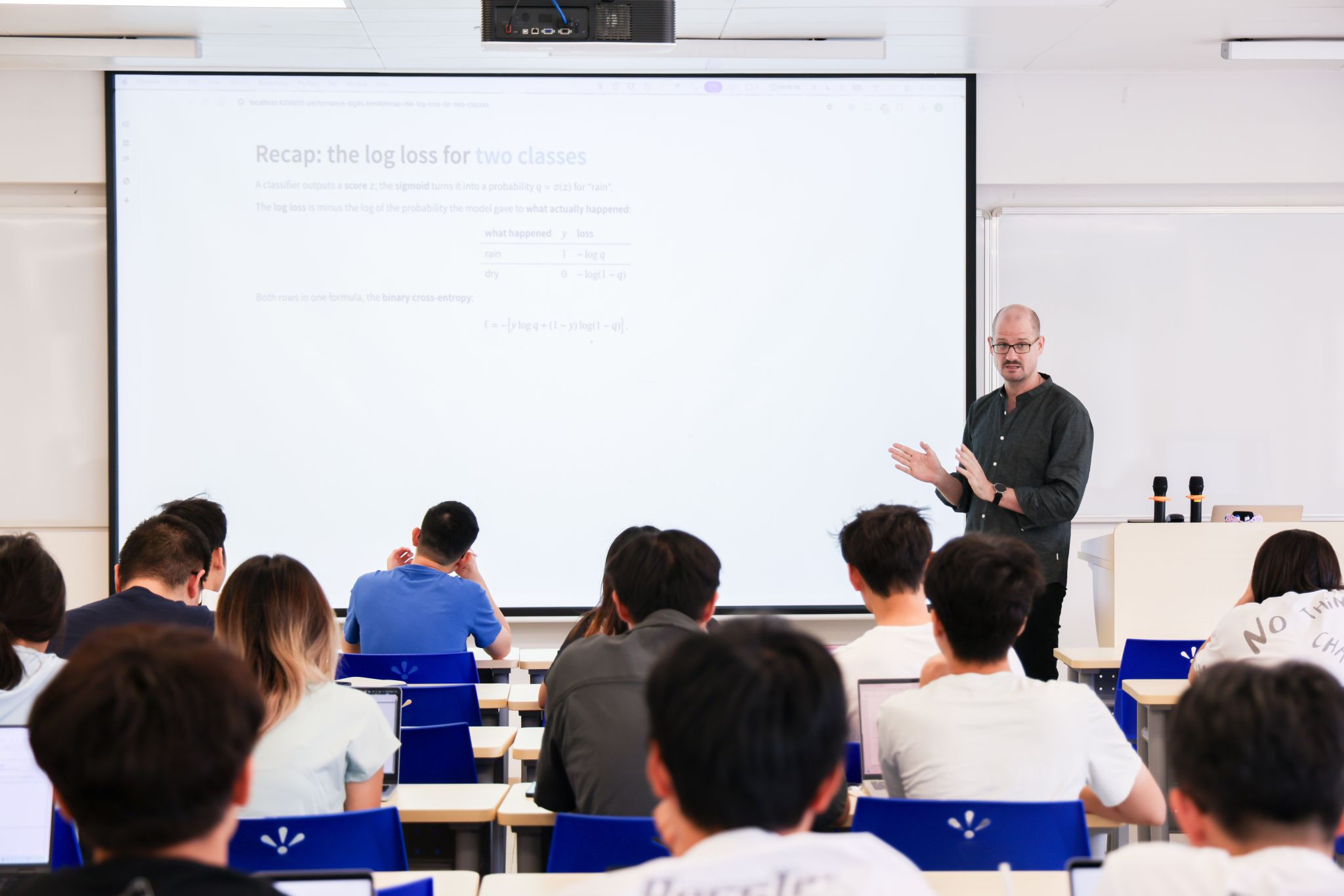
Dr Diehl in class
One of his expectations for students is to be critical. “Even before artificial intelligence appeared, I told my students to absorb information actively instead of passively,” he said.
“When you are reading a paper or using AI, put yourself in an adversarial position. Be critical. Be skeptical.”
Life in the Greater Bay Area opens a next chapter for Diehl. Attracted by Zhuhai's pleasant weather and the convenience of travelling to Shenzhen, Hong Kong and Macao, he is keen to explore more of China, and Inner Mongolia is among the destinations on his wish list.
Dr Shi Jiandong@BNBU: From BU to BU. From student to teacher
Before taking the job at BNBU’s Department of Statistics and Data Science as an assistant professor, Dr Shi Jiandong was familiar with the university. Majoring in statistics, he had visited here during his doctoral studies at its parent university—Hong Kong Baptist University.
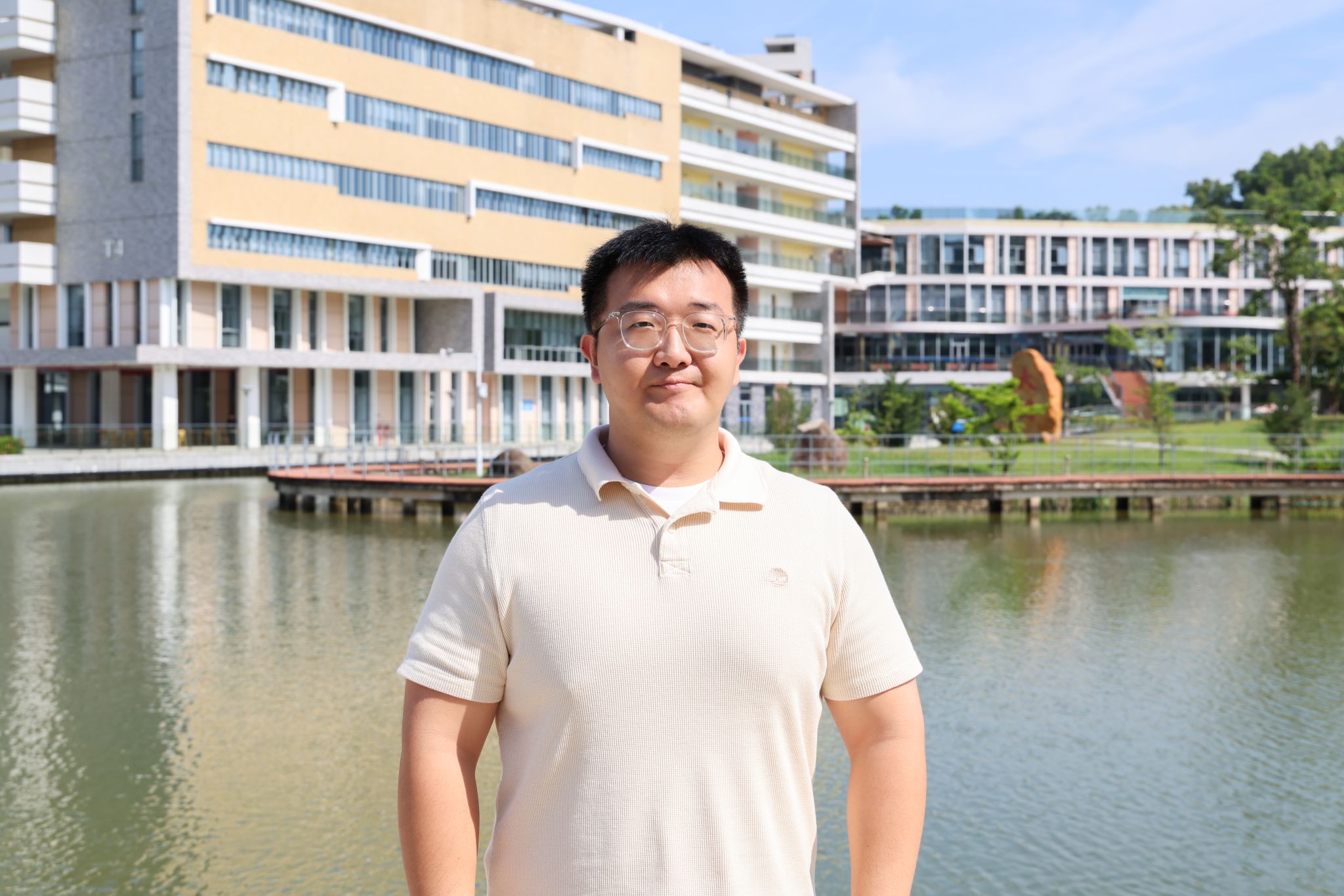
Dr Shi Jiandong at BNBU
After graduating from HKBU, he was a Postdoctoral Fellow at The Chinese University of Hong Kong, and a Postdoctoral Fellow at The Hong Kong University of Science and Technology.
For him, joining BNBU was a natural choice. “I was quite impressed by its environment when I first came here because the buildings are very modern, and I am persuaded by the university’s academic atmosphere that allows more freedom and opportunities for scholars to think and create,” he said.
As an interdisciplinary researcher, Shi's research interests lie at the intersection of statistics, bioinformatics, and evidence-based medicine, with a particular focus on meta-analysis, Bayesian methods, medical statistics, statistical learning, long-read sequencing data analysis, and structural variant detection.
Encouraged and supported by the university, Shi applies for the Joint Research Scheme together with a scholar from HKBU, who plan to conduct studies on Dendrobium officinale, an herb in the Dendrobium family. The team aims to examine the genetic and metabolic characteristics of wild plants and inform cultivation practices.
Talking about the role of statistical researchers in cross-discipline collaboration, he shared, “Our role is not only to present methods for data analysis and provide results, conclusions or recommendations, but also to describe the scope and limitations of these methods and results.”
"People from different disciplines tend to think and approach problems in different ways. Misunderstandings are quite common, so communication is very important for such cooperation," he continued.
As the author of several highly cited papers, he said, "We have always advocated using language that can be understood across different fields, rather than complicating issues with lots of mathematical symbols."
Shi is also bringing these notions into the classroom. Rather than simply presenting formulas and procedures, he wants students to understand the reasoning behind statistical methods and the significance of their results.
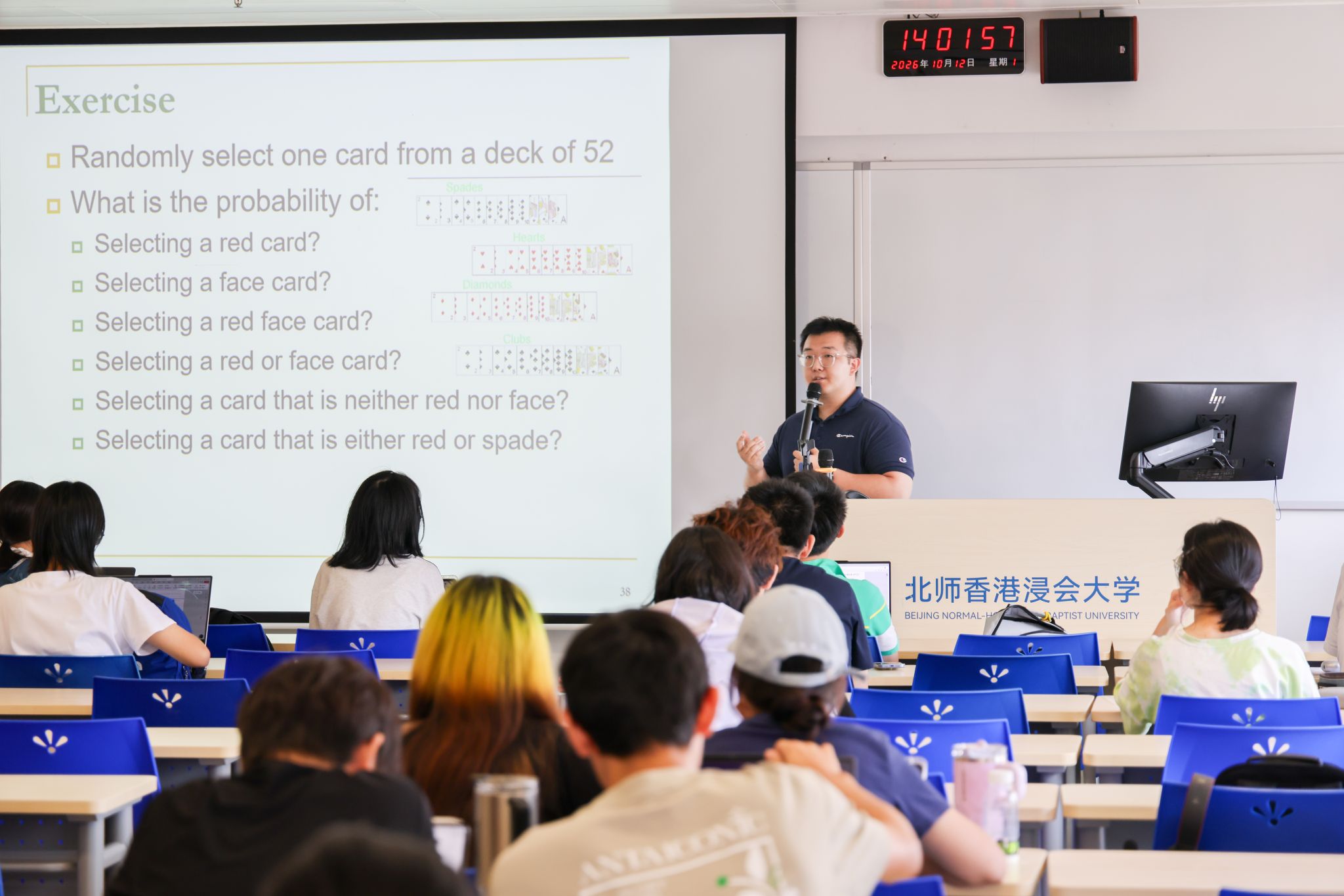
Dr Shi in class
“Ideas matter. I hope my students can be independent, and get hand-on practice on everything. I don’t want them to rely on AI entirely. These are precious qualities that I learned from my tutors," he said. He also welcomes the prospect of involving undergraduates in future research, from developing ideas and testing methods to analysing data and preparing papers.
Looking ahead, Shi hopes to build a research team that brings together complementary expertise and sustains long-term collaboration across disciplines. For him, good research begins with a useful idea, develops through careful analysis and communication, and ultimately helps others understand the world a little better.
From MPRO
Reporter: Cecilia Yu, Koga Song
Video by Hanna He, Owen Li, Cecilia Yu, Juan Rengifo
Photos by Hanna He