A joint research team from Beijing Normal-Hong Kong Baptist University (BNBU) and Hong Kong Baptist University (HKBU) has developed an innovative solution to plastic pollution using mealworms, earning a Silver Award at the 51st International Exhibition of Inventions Geneva.
Led by Dr Leong Chi Man of the Department of Life Sciences at BNBU, and Dr Matthew Lui of the Department of Chemistry at HKBU, the team discovered that adding water and nutrient-rich amino acid supplements derived from food waste significantly enhances the ability of mealworms to consume and break down plastics. The approach improves degradation efficiency by five to ten times. Under optimal conditions, one ton of mealworms can process up to 50 kilograms of low-density plastic per day, including plastic bags, foam materials, and disposable masks.
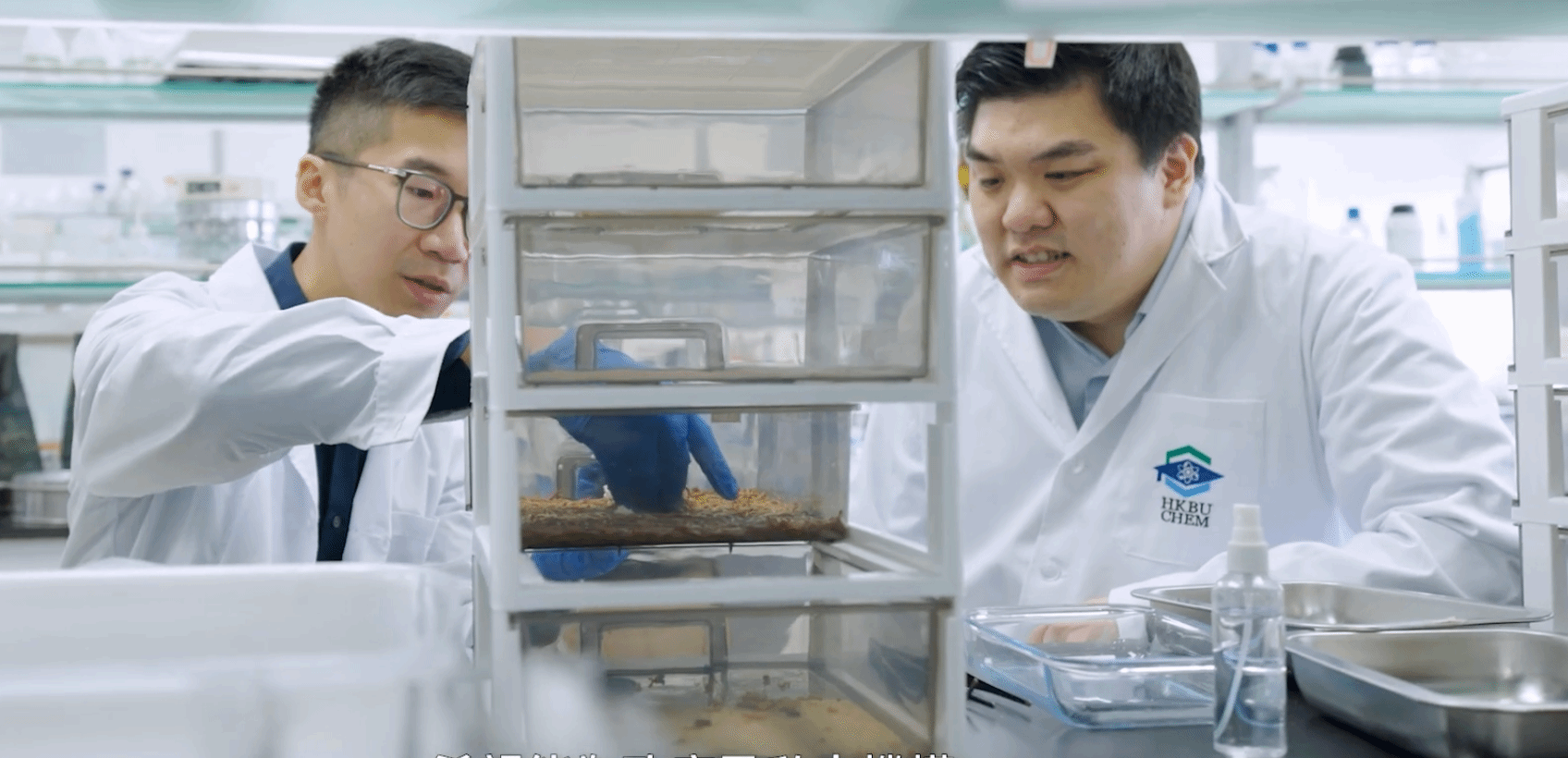
Dr Leong Chi Man (left) and Dr Matthew Lui
Beyond degradation, the process enables value creation. The mealworms partially metabolise plastics into biomass, while their waste can be further processed to extract chitin and chitosan—high-value biomaterials widely used in medical, packaging, and cosmetic applications.
Dr Leong explained: “Not only have we accelerated the degradation process, but we can also utilise the gut microbiota of insects to convert plastic into high-value biomaterials, resulting in a significant improvement in both efficiency and economic value.”
The project, titled “Insect-based Circular Economy by Turning Plastic Waste into Essential Biomaterials”, received international recognition at the Geneva exhibition, which featured over 1,000 inventions from 35 countries and regions. The team’s findings on “Enhancing Plastic Decomposition in Mealworms (Tenebrio molitor): The Role of Nutritional Amino Acids and Water”, have also been published in leading journals, including Advanced Energy and Sustainability Research and ACS Sustainable Chemistry & Engineering.
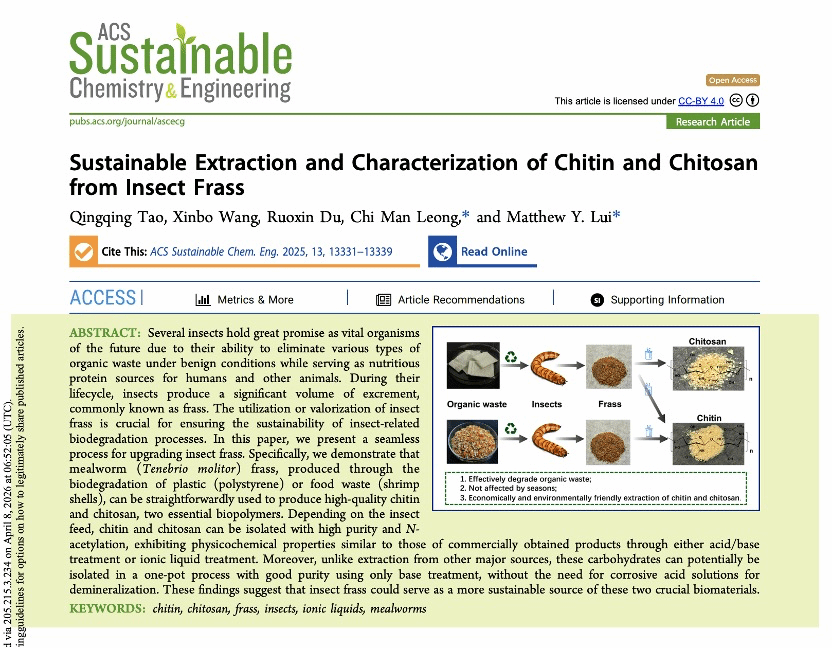
The research is currently undergoing scale-up trials in Zhuhai, with further optimisation and potential industrial application under development.
The project also highlights BNBU’s emphasis on integrating research and education. Undergraduate students played an active role in the study. Du Ruoxin, a second-year Environmental Science student at BNBU, participated in the project from her first year and contributed to experimental design, data analysis, and academic writing. She is listed as a co-author on the published papers.
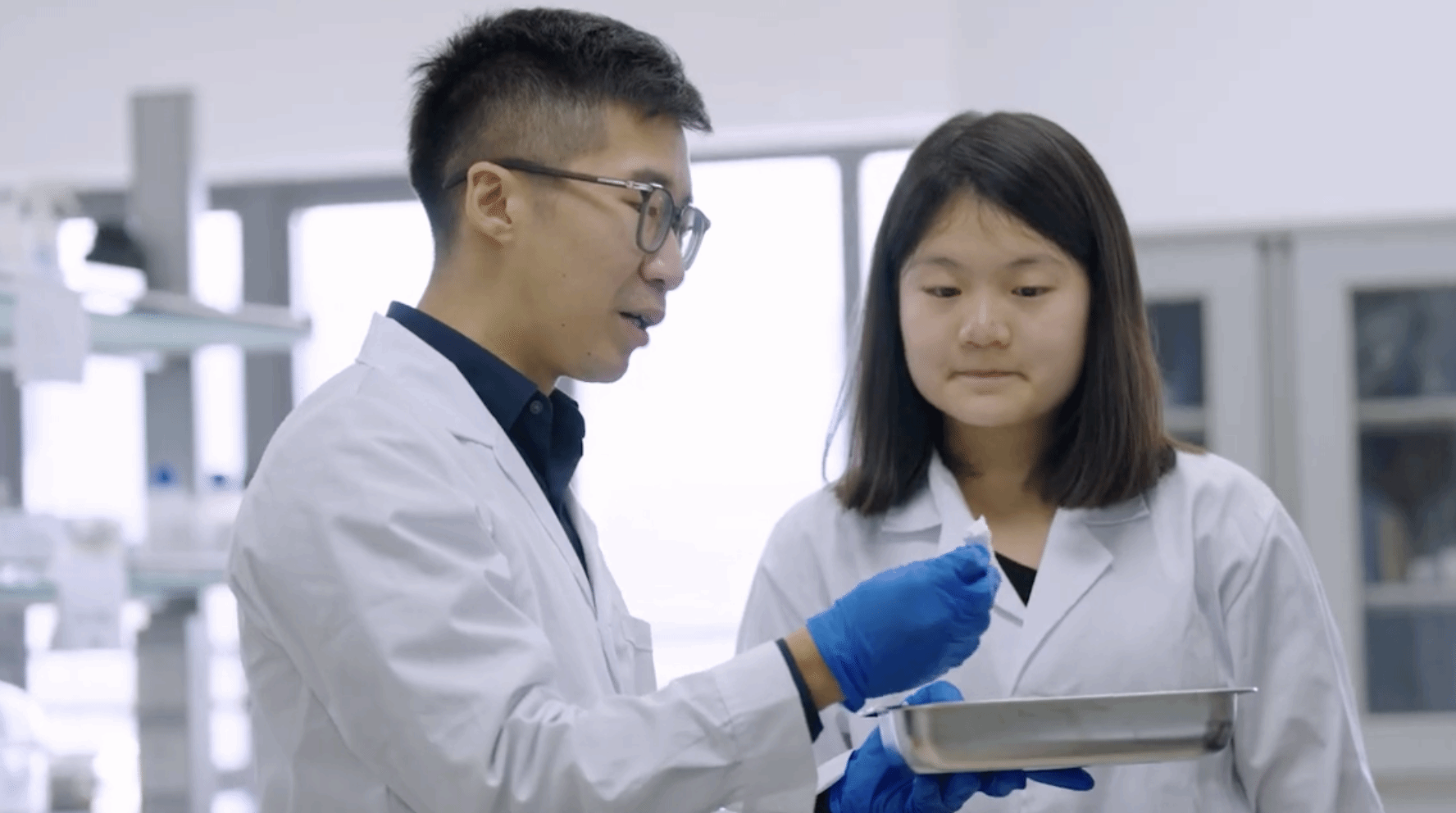
Dr Leong with BNBU student Du Ruoxin at the lab
“Through this experience, I realised that science is not just about data in the lab—it can truly make a difference in the world,” she said.
From MPRO
Reporter: Cecilia Yu
Photos provided by the interviewees